联系电话 +86-512-36622455


最新公告:
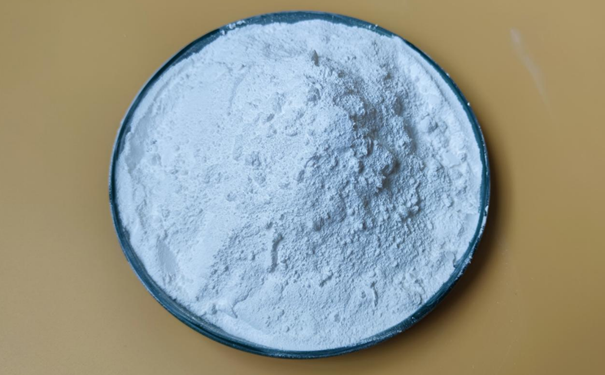
Aluminum diethylphosphonate (ADP) is a widely used halogen-free flame retardant. Belonging to the organic compound family, it exhibits excellent high-temperature resistance, dispersibility, compatibility, and flowability. It is widely used to reinforce PBT, PET, PA6, cables, adhesives, and textile coatings, providing halogen-free, natural-color flame retardancy. ADP combined with MPP can completely replace OP1230 and OP1240.
I. Basic Data
English Name: Aluminum Diethylphosphinate (ADP)
Molecular Formula: (C4H10O2P)3.Al
Molecular Weight: 390.27
CAS NO: 225789-38-8
HS Code: 2931909090
II. Product Specifications
P%: 23.0-24.0
Moisture %: <0.5
Density: Approx. 1.35 g/cm³
Bulk Density: Approx. 100-250 KG/m³
Particle Size (D50): 1.7-2.3 μm
Decomposition Temperature (TGA 1%): >350℃
pH Value (Potential pH Meter): 4.5
II. Mechanism of Action:
1. Its main chemical bond positions are P-C, P=O, and P-O. Its flame-retardant process is relatively complex, and the special chemical bond structure contributes to its highly efficient flame-retardant effect.
2. Acts as a condensed phase in flame retardant systems, promoting polymer charring.
3. Often used in combination with other halogen-free flame retardants such as MCA and methylphosphonate to achieve synergistic effects.
4. Contains phosphorus compounds in many oxidation states. Its thermal decomposition products have a strong dehydrating effect, charring the polymer surface and forming a carbon film, thus providing flame retardancy.
5. Possesses the basic flame retardant characteristics of phosphorus-based flame retardants, exhibiting both gas-phase and condensed-phase flame retardancy.
6. Rapidly and efficiently removes high-energy free radical hydroxyl radicals (HO-) from the combustion zone. During polymer combustion, aluminum diethylphosphonate releases phosphorus compounds into the flame, which then transform into phosphorus-containing free radical quenchers with flame-retardant capabilities at high flame temperatures.
III. Application Areas
1. Primarily used in thermoplastic and thermosetting plastics due to its high phosphorus content and high flame retardant efficiency. Especially suitable for polyesters. Suitable for both glass fiber reinforced and unreinforced grades. Flame-retardant polyester compounds possess excellent physical and electrical properties.
2. ADP exhibits excellent flame-retardant properties in polyester (PET & PBT), nylon, epoxy resin, SEBS, EPDM rubber, and other materials, and is particularly suitable for flame retardancy in wires and cables, high-end engineering plastics, and high-temperature nylon, PA, PBT, and PET.
V. Usage Recommendations
1. As a flame retardant, ADP can be used alone or in combination with other flame retardants such as MPP and MCA, all achieving good flame-retardant effects. When added to PBT, ADP at 20% (parts by weight) achieves a UL94V-0 rating (thickness 1.6-0.8 mm) for electrical components. When added to PET, a 15% (parts by weight) addition achieves a UL94V-0 rating. The amount of flame retardant added will vary depending on the polymer grade, processing conditions, and the addition of glass fiber.
2. Processing: Before adding ADP flame retardant, polyester materials should generally be pretreated. If possible, the moisture content of PBT and PET materials should be below 0.05% and 0.005% (parts by weight), respectively. ADP flame retardant does not need to be pre-dried. If a very low moisture content of the flame retardant is required, we recommend pre-drying (e.g., drying at 130°C for 3 hours). 3. When applying, please use appropriate amounts of stabilizers and coupling agents, and compound with other phosphorus-nitrogen flame retardants such as APP, MC, or MCA. For polyester or polyester-type TPU, only 8-12% of this product is needed to meet flame retardant requirements; for SEBS, 25-35% is required.
4. Generally, polyester powder is mixed and processed with aluminum diethylphosphonate flame retardant to ensure thorough mixing. Domestic safety regulations must be strictly followed. Optimal mixing conditions depend on the specific circumstances; ensure all components are uniformly dispersed, and the polymer melting temperature should not exceed 320°C.
Aluminum diethylphosphonate is used in connectors, circuit breakers, relays, and other electronic and electrical components. Adding 15%-20% can bring materials with a thickness of 1.6-0.8mm to UL 94 V-0 level, suitable for use in wires and cables, automotive sealing strips, etc., meeting flame retardant requirements while maintaining good elasticity and processability. It boasts high flame retardant efficiency, good thermal stability, low smoke and low toxicity, and minimal impact on material properties, making it widely used in high-end flame retardant applications such as engineering plastics, electronics, and new energy vehicles.